
Echizen Kimono Hyousou GALLERYBy Miyamori e.hyousou
-
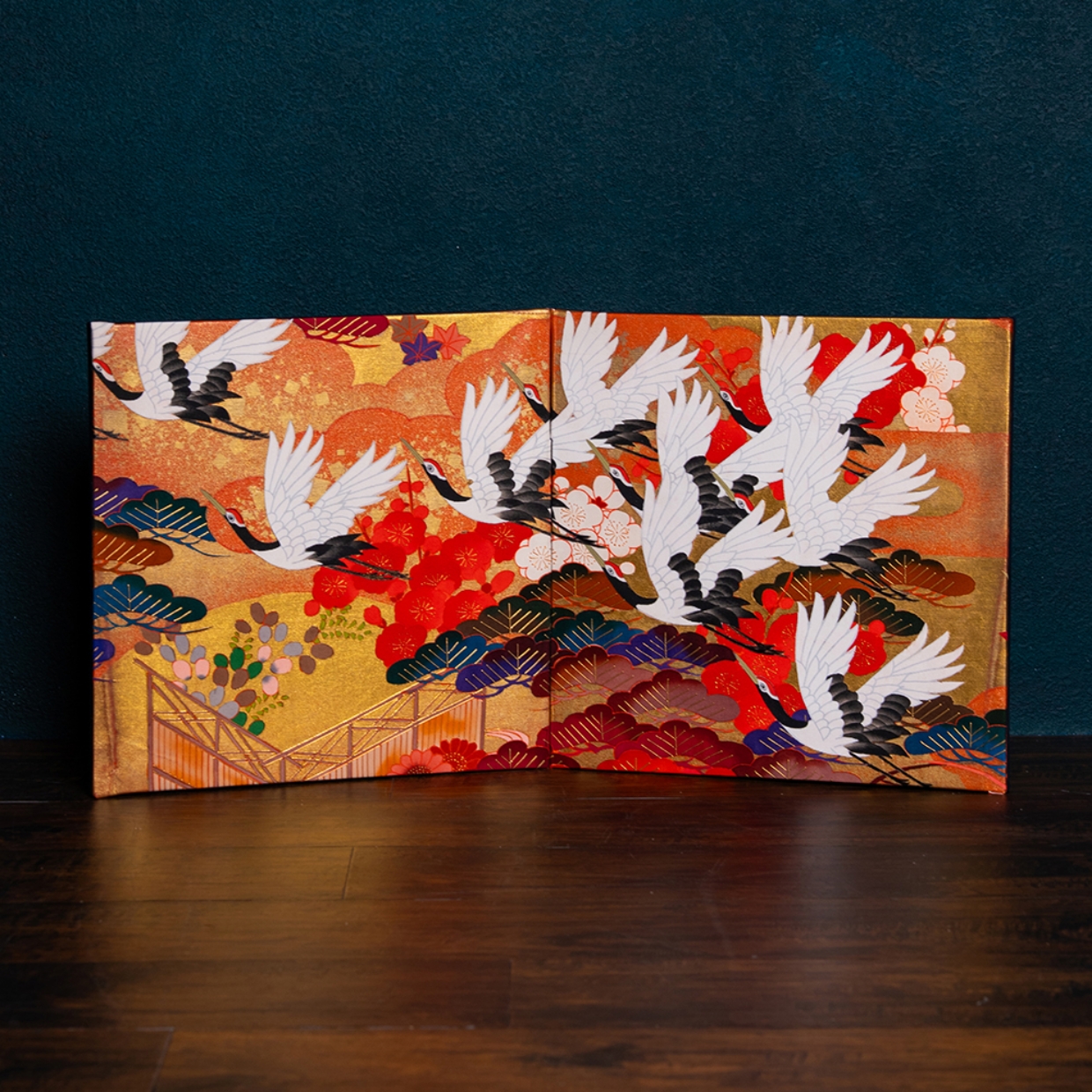
e. 38 Makamizu
(64cmW×33cmH)
100,000JPY
A hand-printed Yuzen Uchikake (wedding kimono),
depicting seasonal flowers, a flock of migratory birds in a tranquil rural landscape.
This bridal gown was crafted with the heartful wishes for happiness to the newly-wedded couple. -
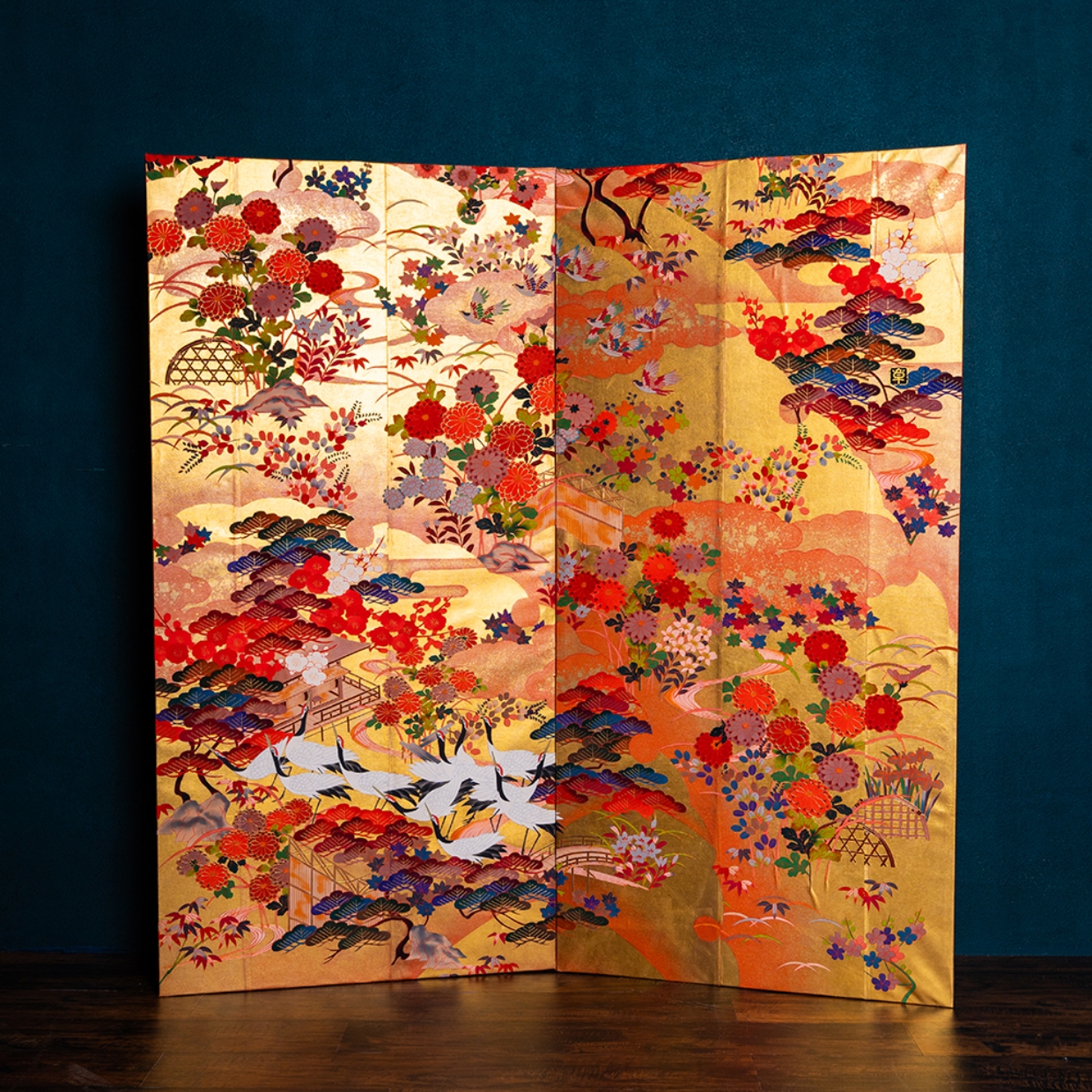
e. 37 Makamizu
(144cmW×70cmH)
200,000JPY
A hand-printed Yuzen Uchikake (wedding kimono),
depicting seasonal flowers, a flock of migratory birds in a tranquil rural landscape.
This bridal gown was crafted with the heartful wishes for happiness to the newly-wedded couple. -
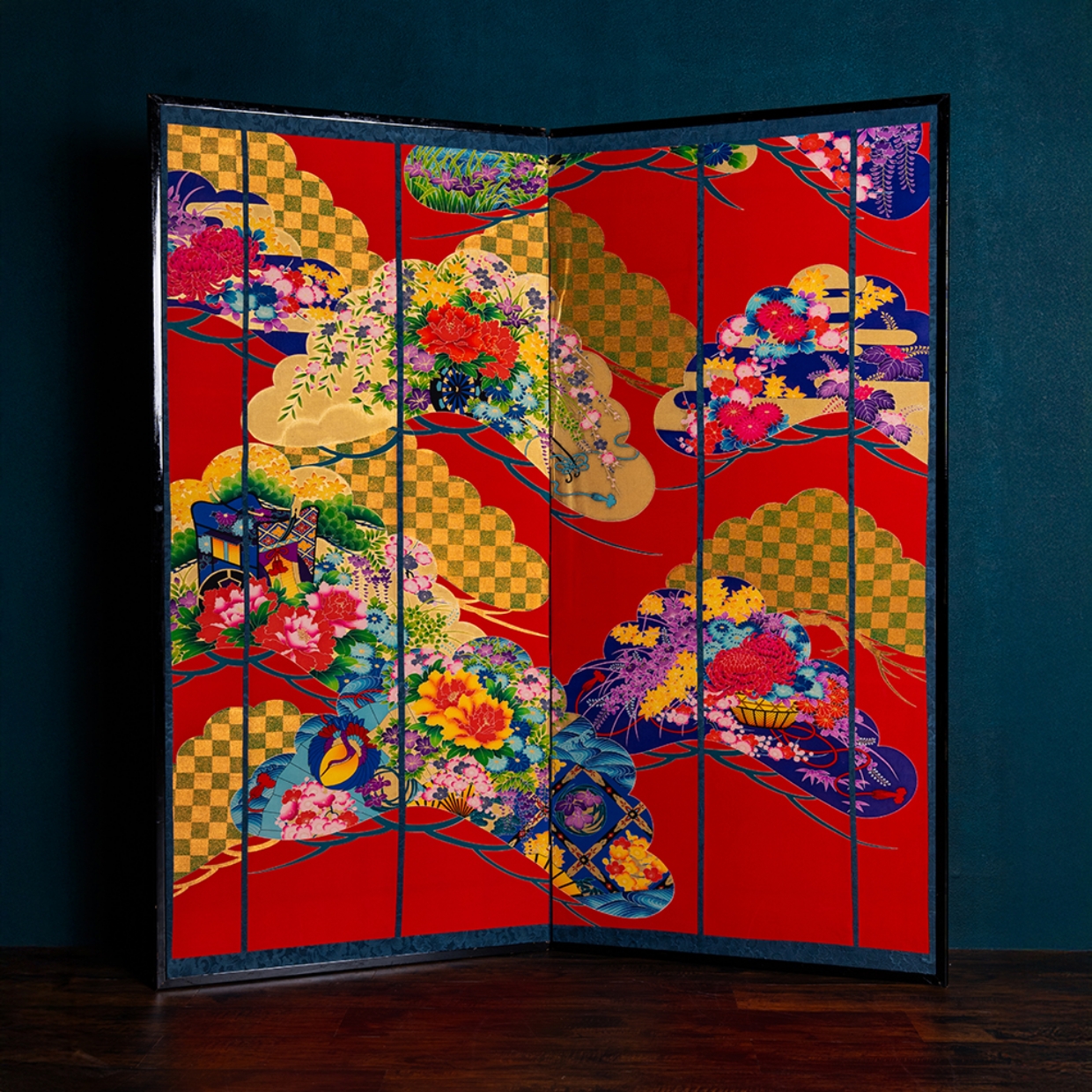
e. 36 Pine
(142cmW×153cmH)
100,000JPY
Yuzen Uchikake (wedding kimono) was framed into a two-panel holding screen.
The design features pine trees, which symbolize longevity, with seasonal flowers and checkered patterns, meaning good-luck. -
SOLDOUT
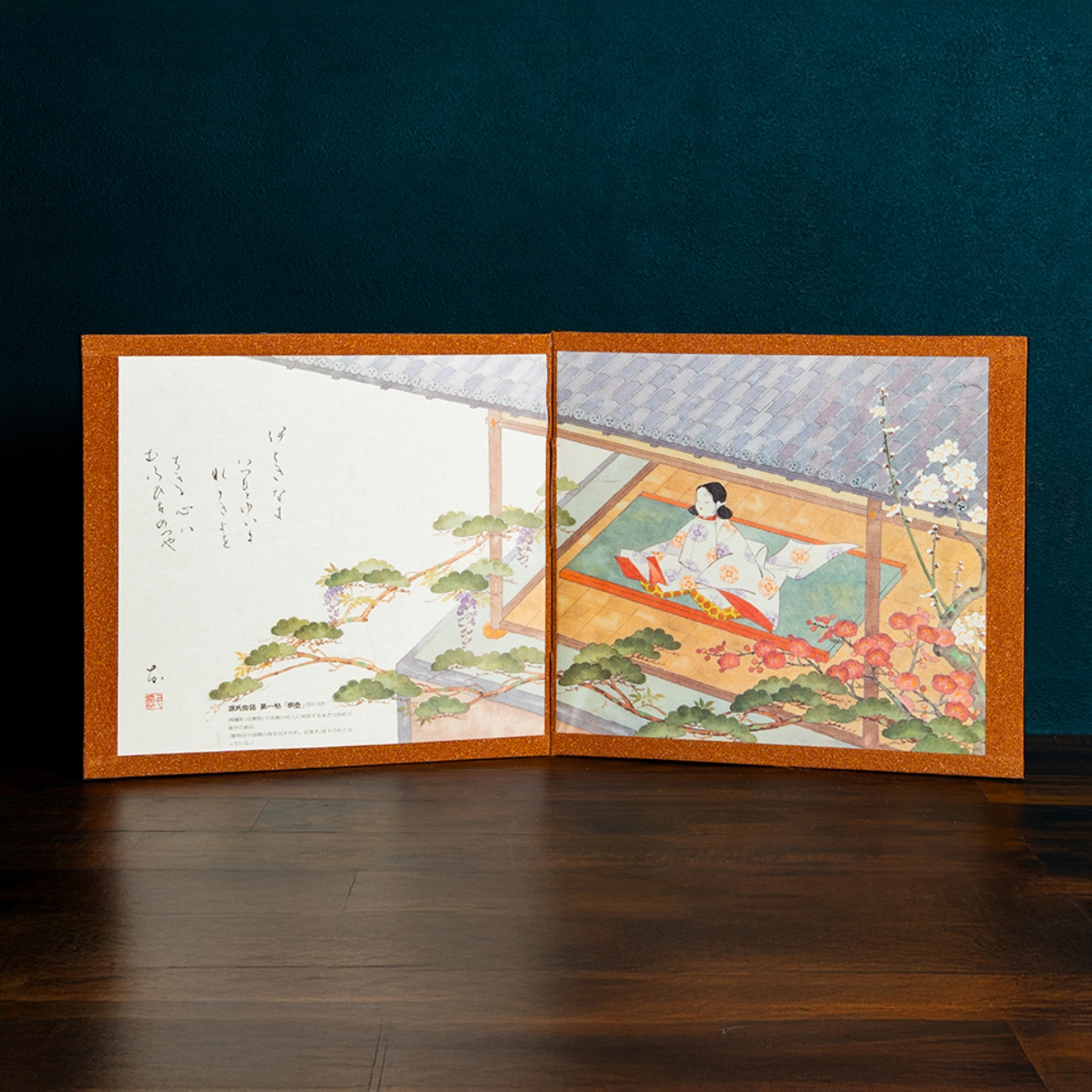
e. 35 The Tale of Genji, Book 1: “The Paulownia Pavilion”
(91cmW×41cmH)
25,000JPY
The Tale of Genji, considered the world’s oldest novel.
From the first chapter, “The Paulownia Court,” depicting the protagonist Hikaru Genji before his coming-of-age ceremony. -
SOLDOUT
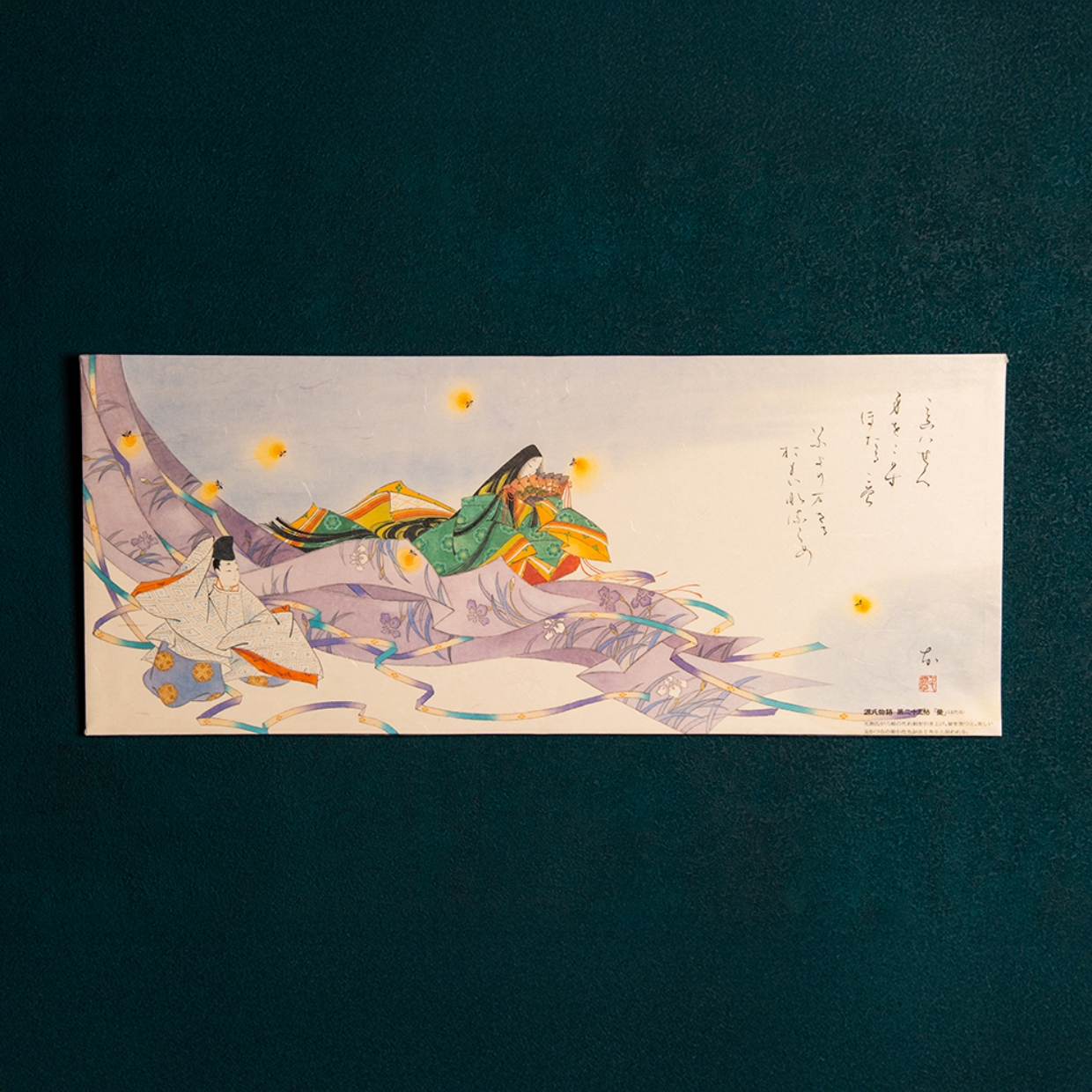
e. 34 The Tale of Genji, Chapter 25: “Fireflies”
(85cmW×36cmH)
15,000JPY
The Tale of Genji, considered the world’s oldest novel.
This framed piece uses recycled paper from the 25th chapter, “Fireflies,” depicting a scene from the work. -
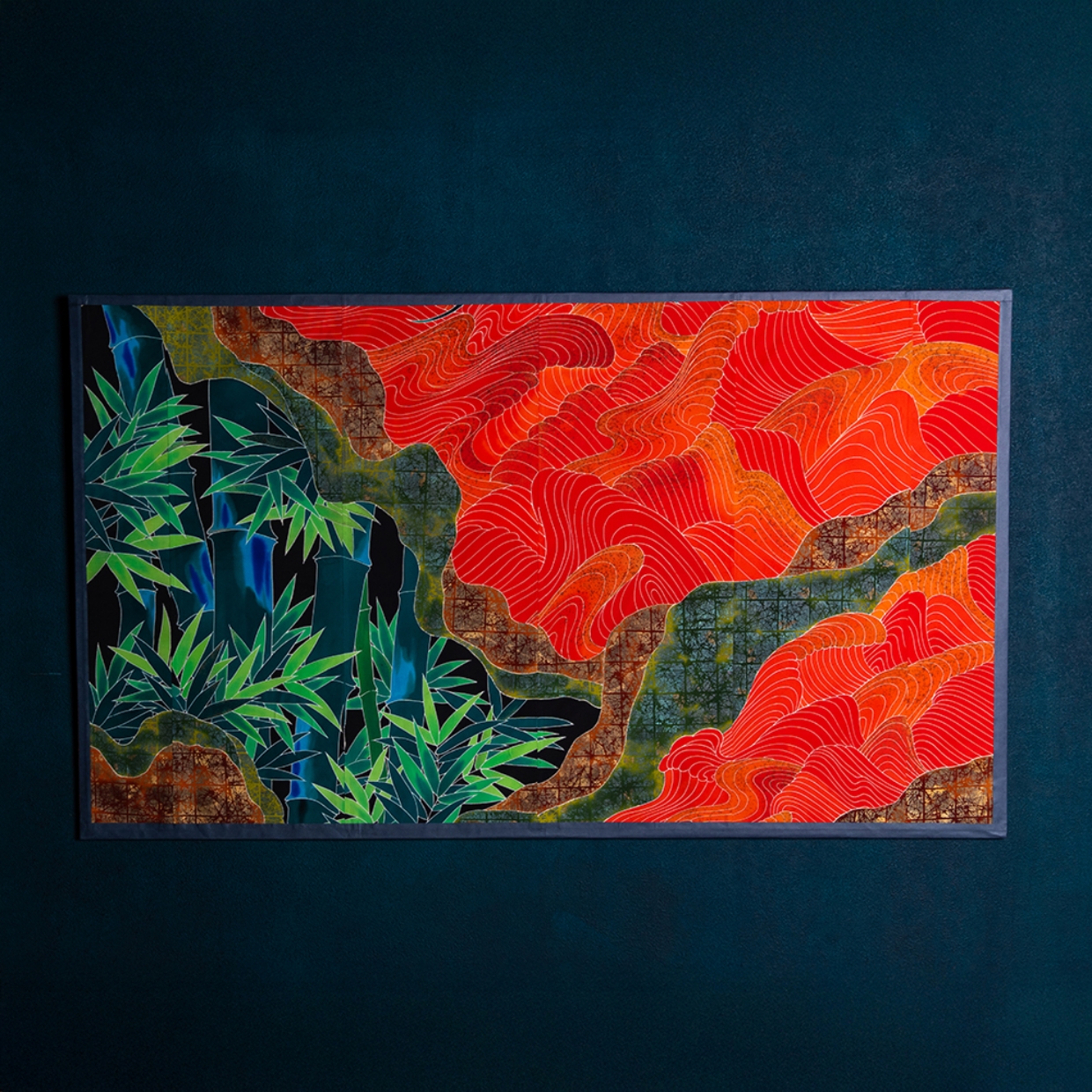
e. 33 Celebration Takunami
(91cmW×150cmH)
150,000JPY
“Kotohogi” is a word expressing celebration. We named it “Kotohogi” as a congratulatory gift for the couple getting married.
The “bamboo,” which stays green and grows straight and strong even in winter, and the “flowing water,” which washes away misfortune, express a bright future. -
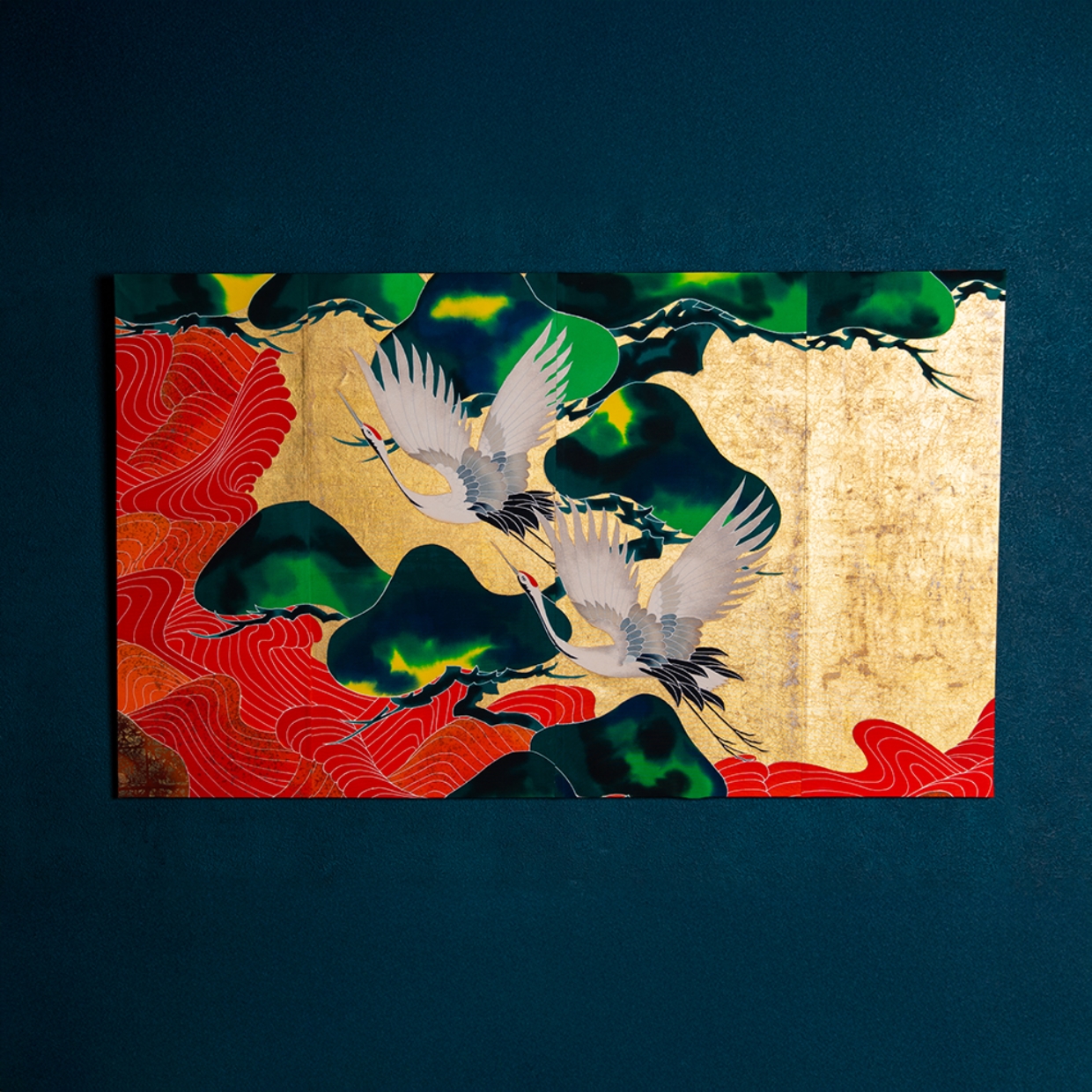
e. 32 Celebration Crane
(112cmW×67cmH)
150,000JPY
“Kotohogi” is a word used to express celebration. We named it “Kotohogi” as a congratulatory gift for the couple getting married.
It depicts the “crane,” symbolizing eternal marriage; the “pine tree,” representing warding off evil and marital harmony; and “flowing water,” signifying the washing away of misfortune. -
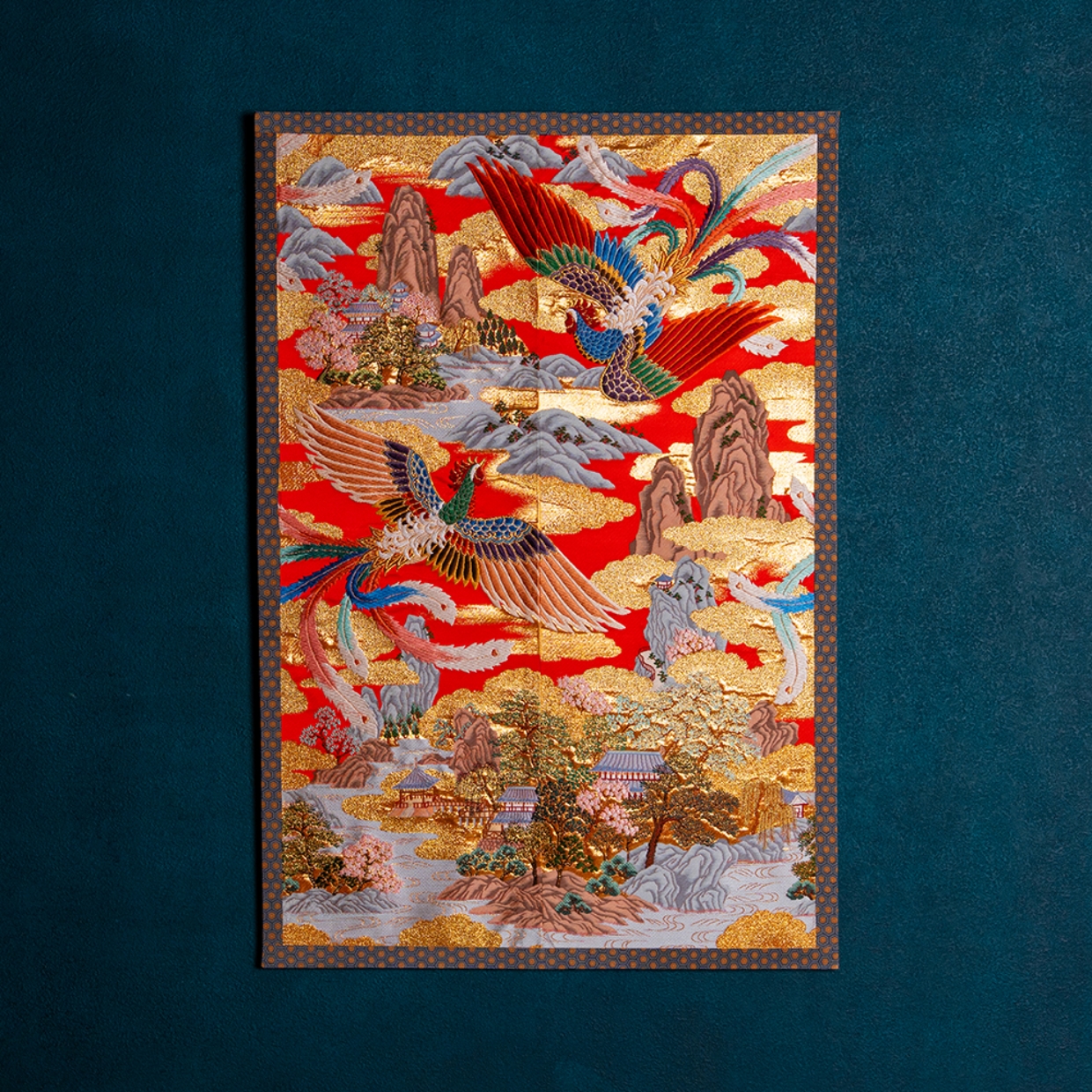
e. 31 Fairyland Phoenix
(70cmW×103cmH)
100,000JPY
This design depicts a celestial realm often rendered in ink wash paintings, said to be the dwelling place of immortals.
It features the auspicious phoenix, considered an omen of good fortune, dancing through the immortal realm. -
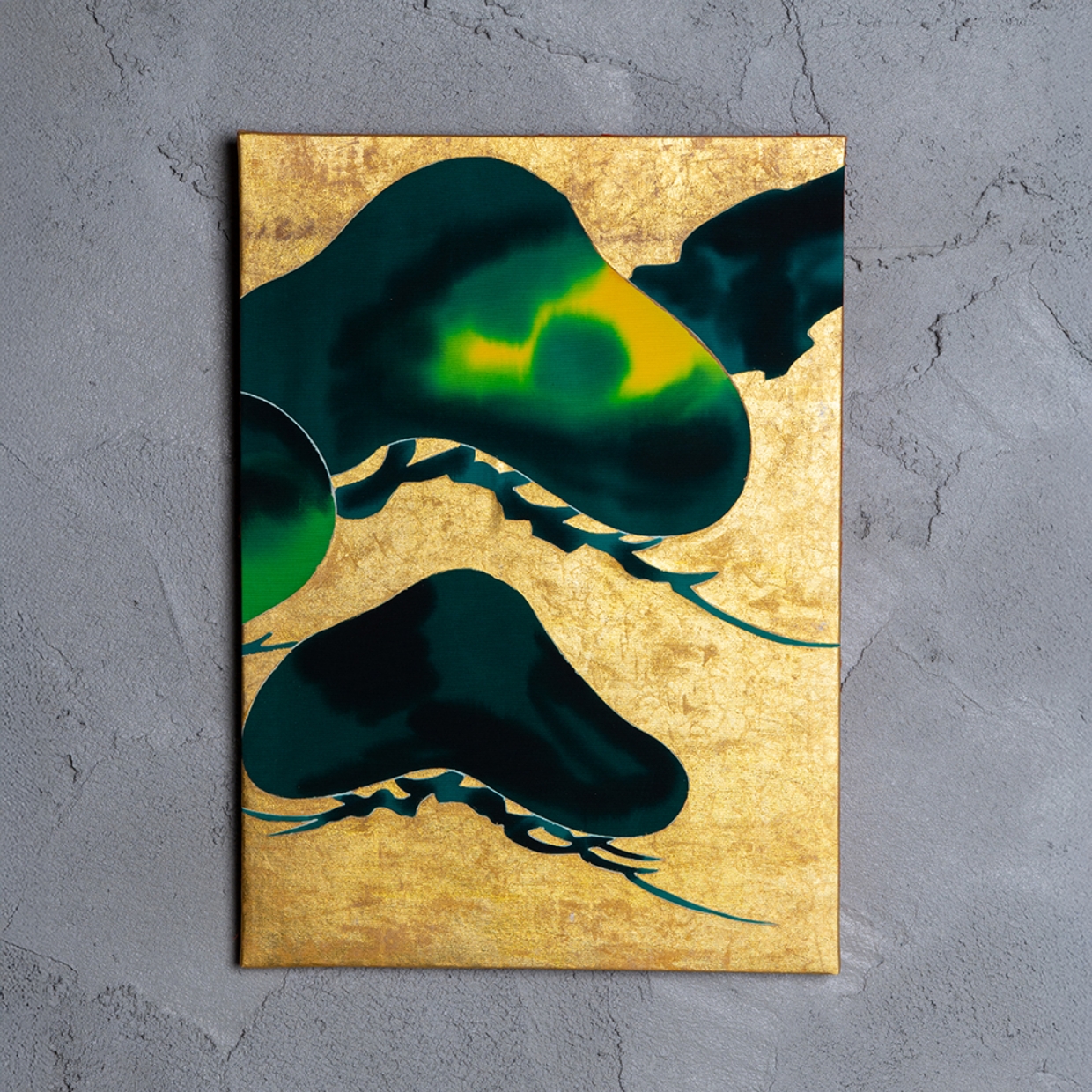
e. 30 Gold-painted Pine
(33cmW×45cmH)
80,000JPY
“Kotohogi” is a word used to express celebration.
It was named “Kotohogi” as a congratulatory gift for the couple getting married.
The pine tree pattern, considered a symbol of marital harmony, embodies wishes for longevity, eternal youth, and prosperity. -
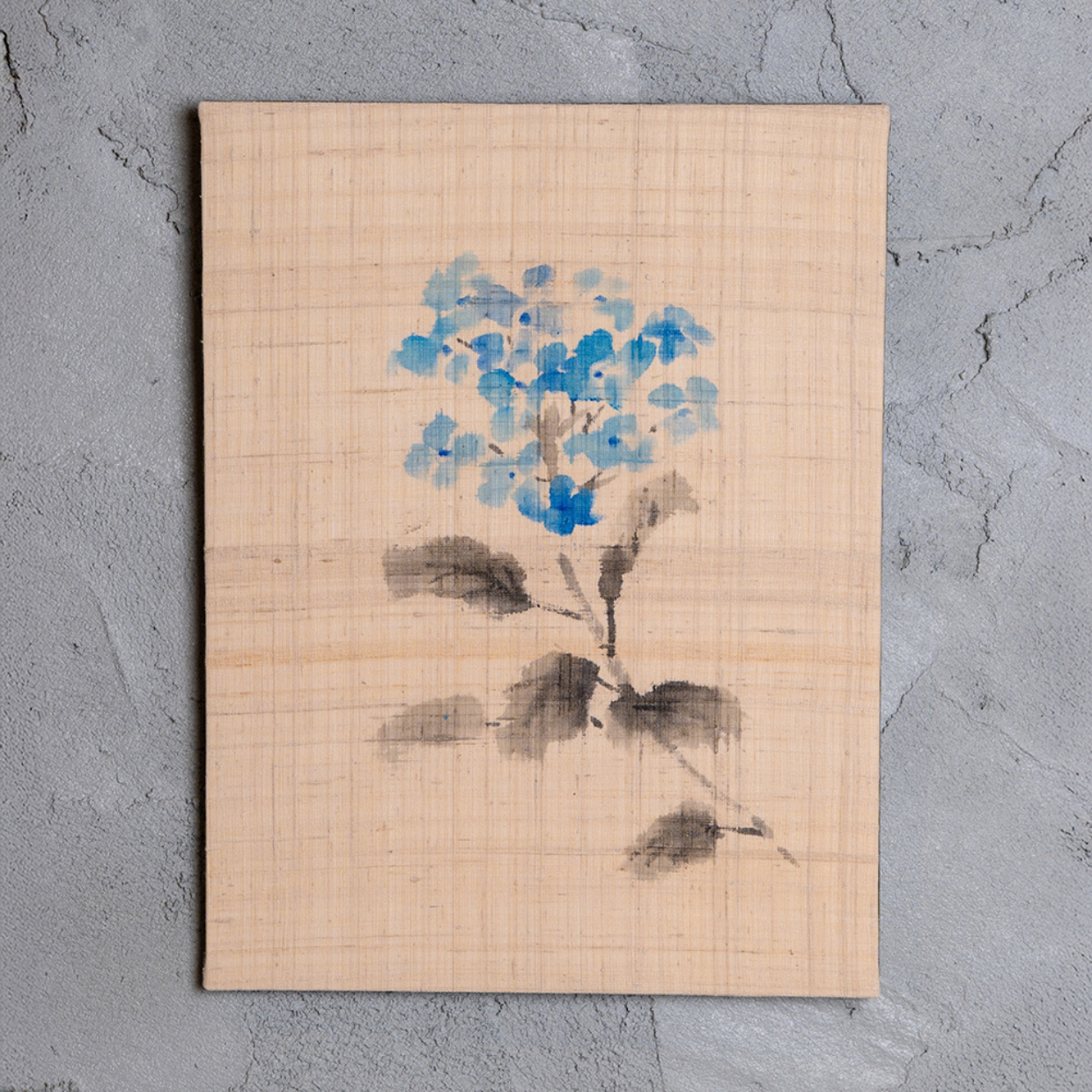
e. 29 Hydrangea
(32cmW×42cmH)
30,000JPY
Hydrangeas are often used in charms for warding off evil spirits and improving financial fortune.
Because their color changes depending on the soil, they are used as a motif symbolizing “change, harmony, and abundance.” -
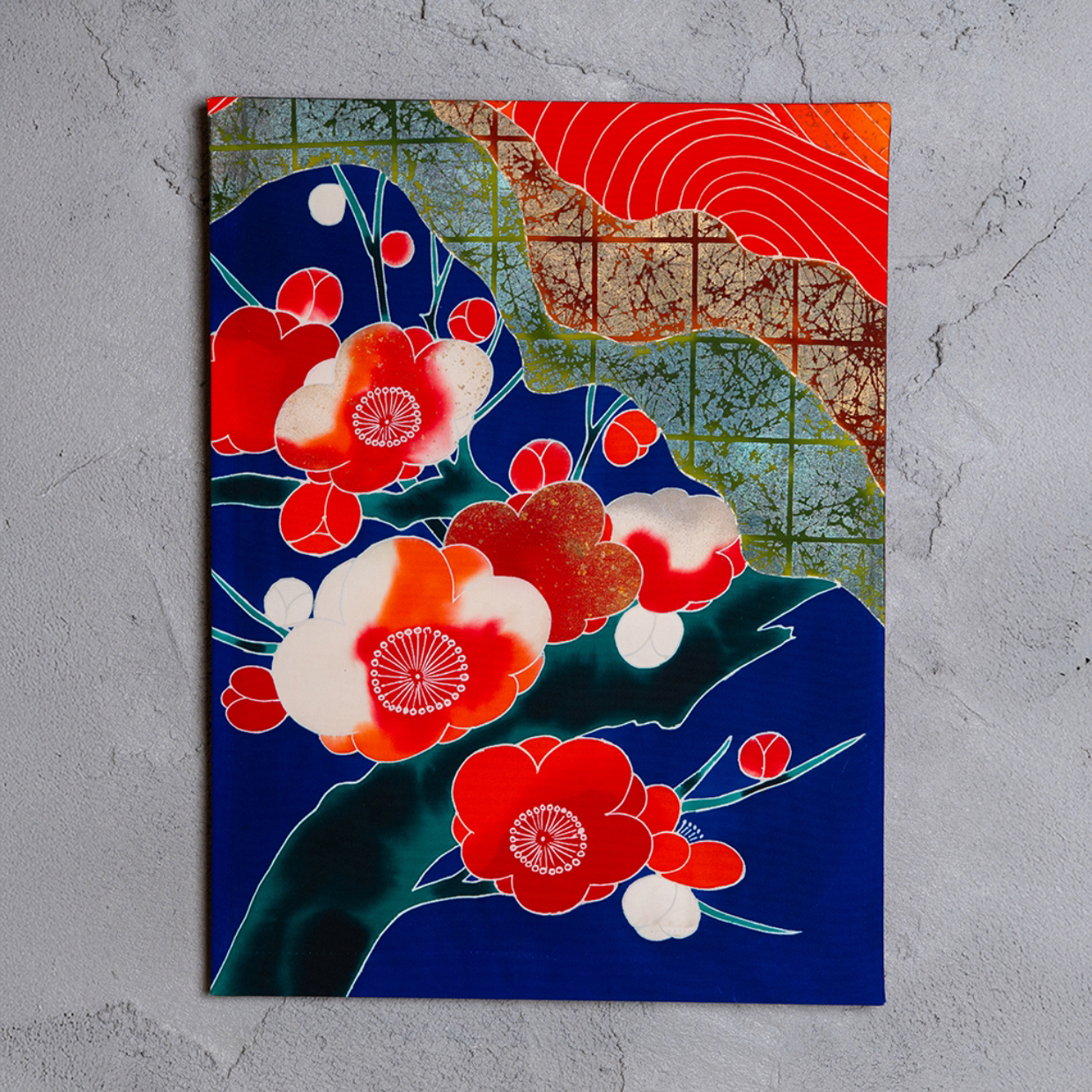
e. 28 Celebratory Plum
(36cmW×49cmH)
80,000JPY
Plum blossoms, like cherry blossoms, are representative flowers beloved by the Japanese people.
Blooming first in spring, the plum blossom is regarded as a symbol of endurance, vitality, and the prosperity of descendants. -
SOLDOUT
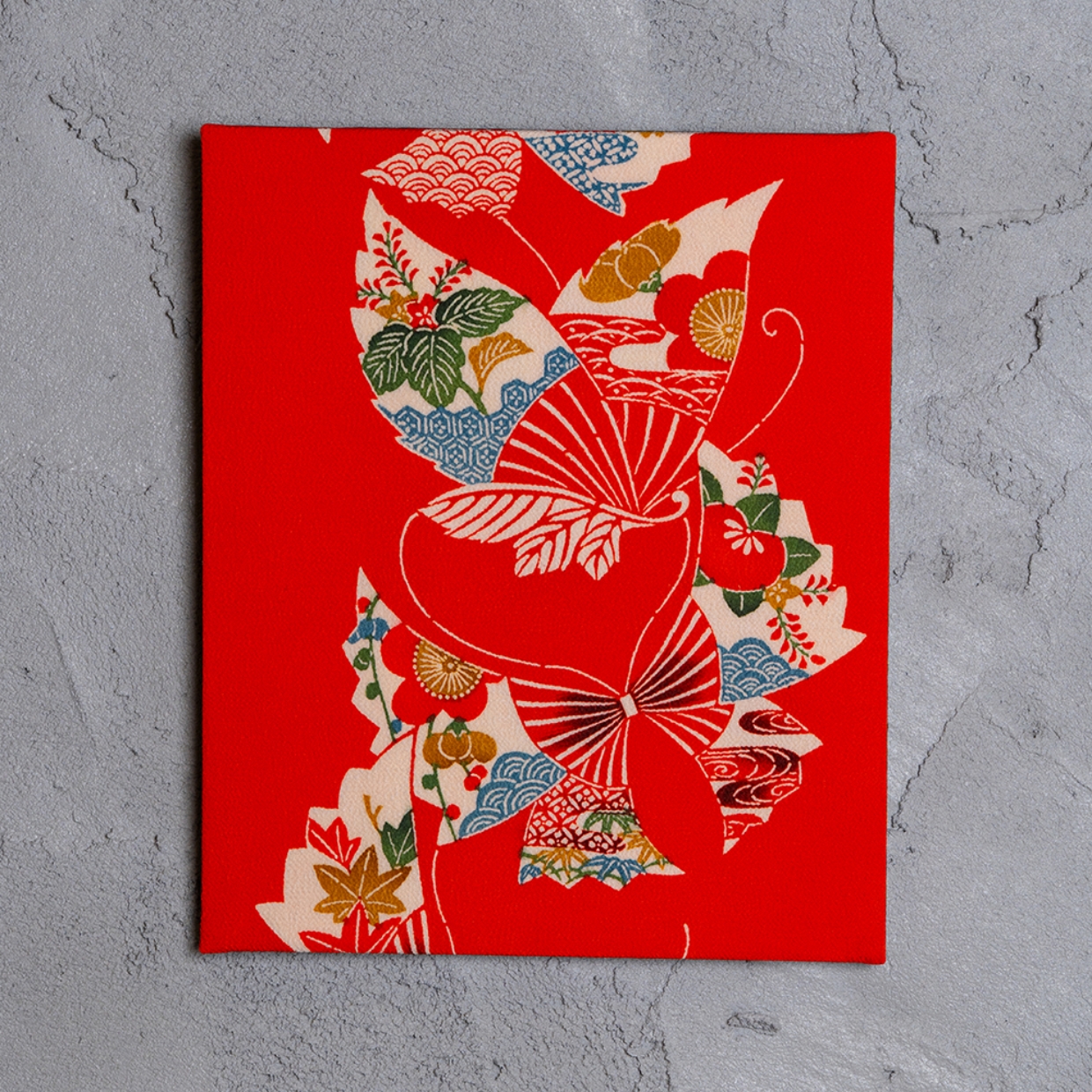
e. 27 Butterfly
(35cmW×38cmH)
40,000JPY
From egg to larva, then to chrysalis, and finally to butterfly—its journey through the sky embodies the leaps, growth, and aspirations of life.
-
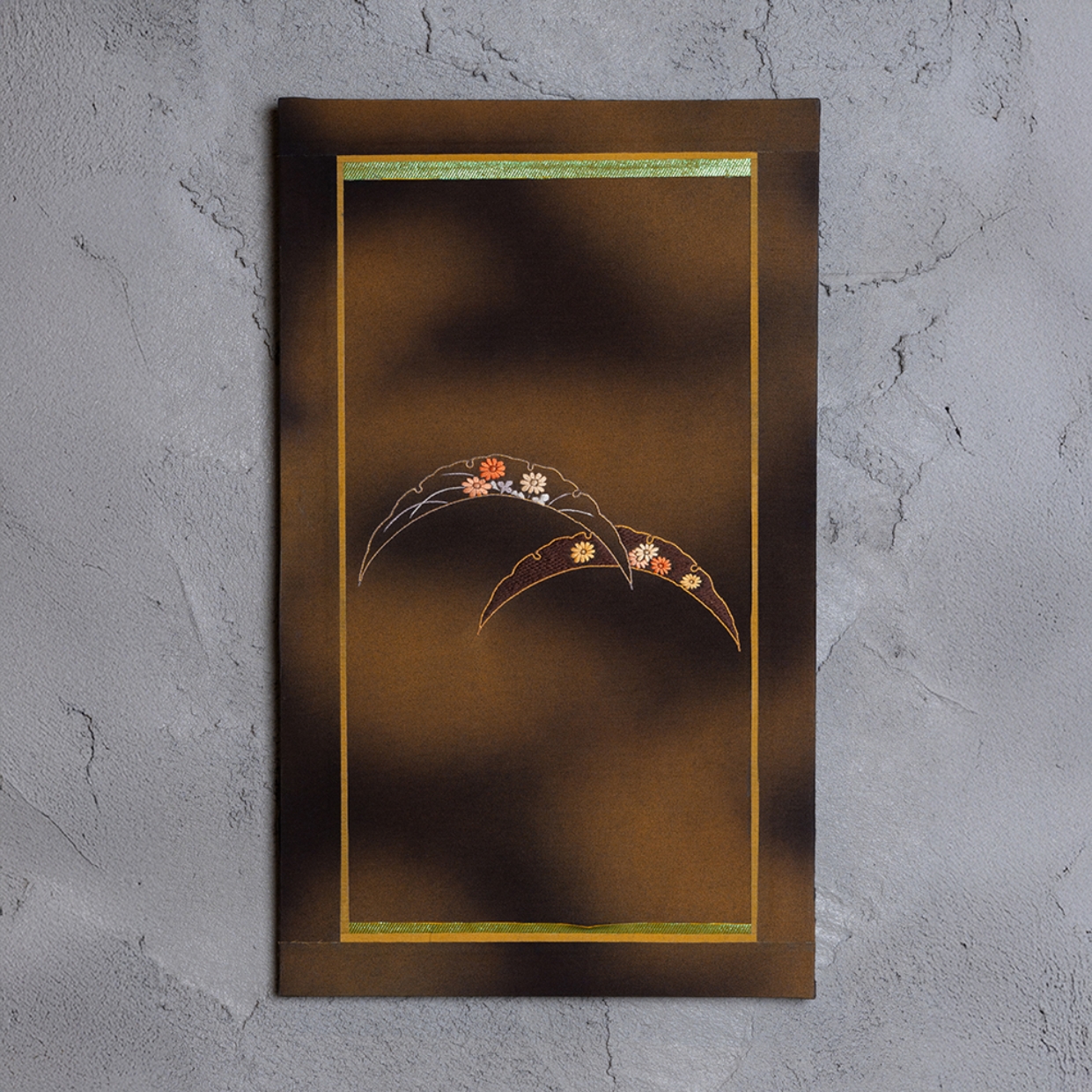
e. 26 Dew grass
(31cmW×52cmH)
30,000JPY
This pattern, known as “tsuyushiba,” is commonly used in Noh costumes and kosode kimonos.
It represents the summer season, symbolizing “transience, coolness, and vitality.” -
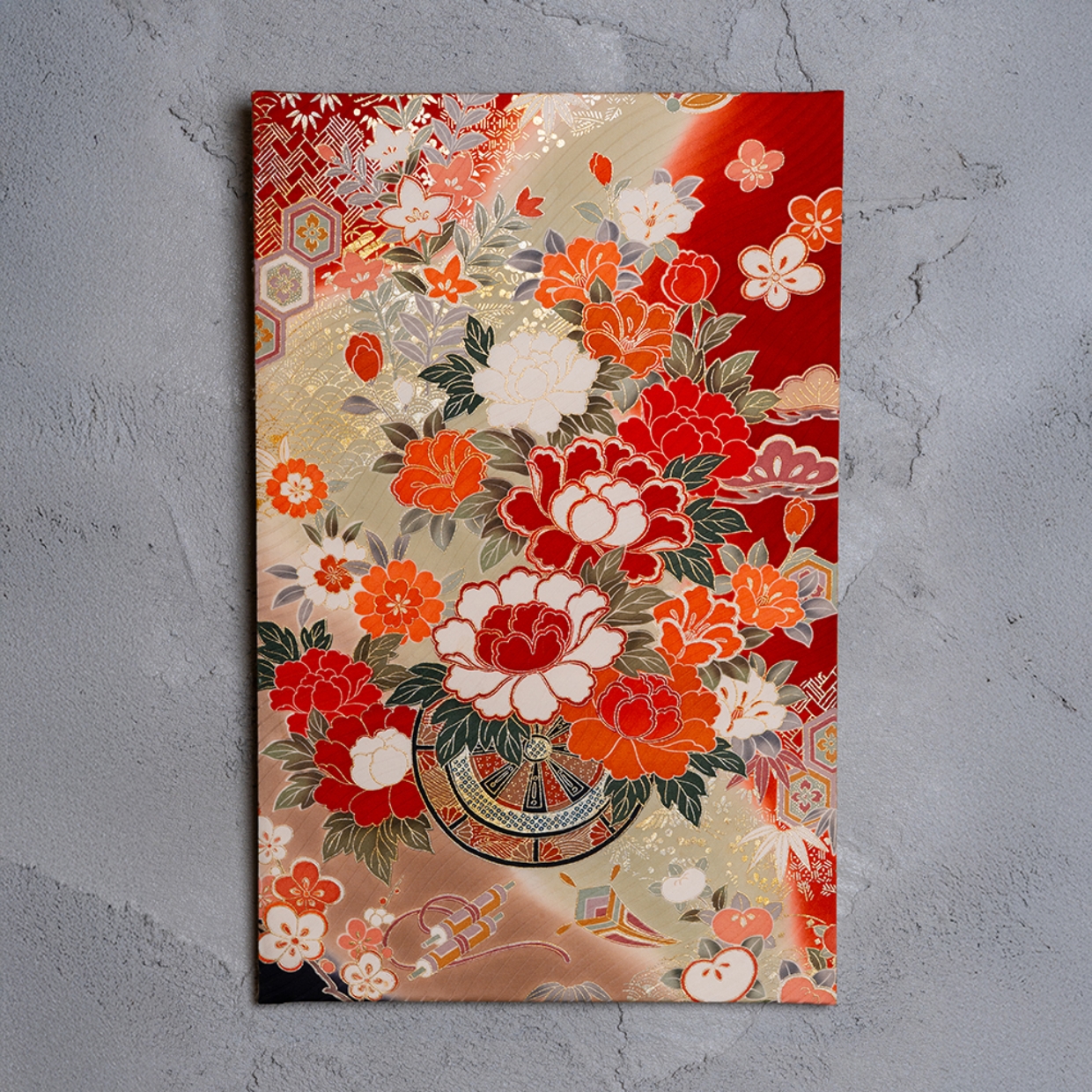
e. 25 Flower float
(33cmW×51cmH)
30,000JPY
This elegant and lustrous pattern depicts an imperial carriage, known as a gyosha, laden with an overflowing abundance of seasonal flowers and plants.
It is beloved by women. -
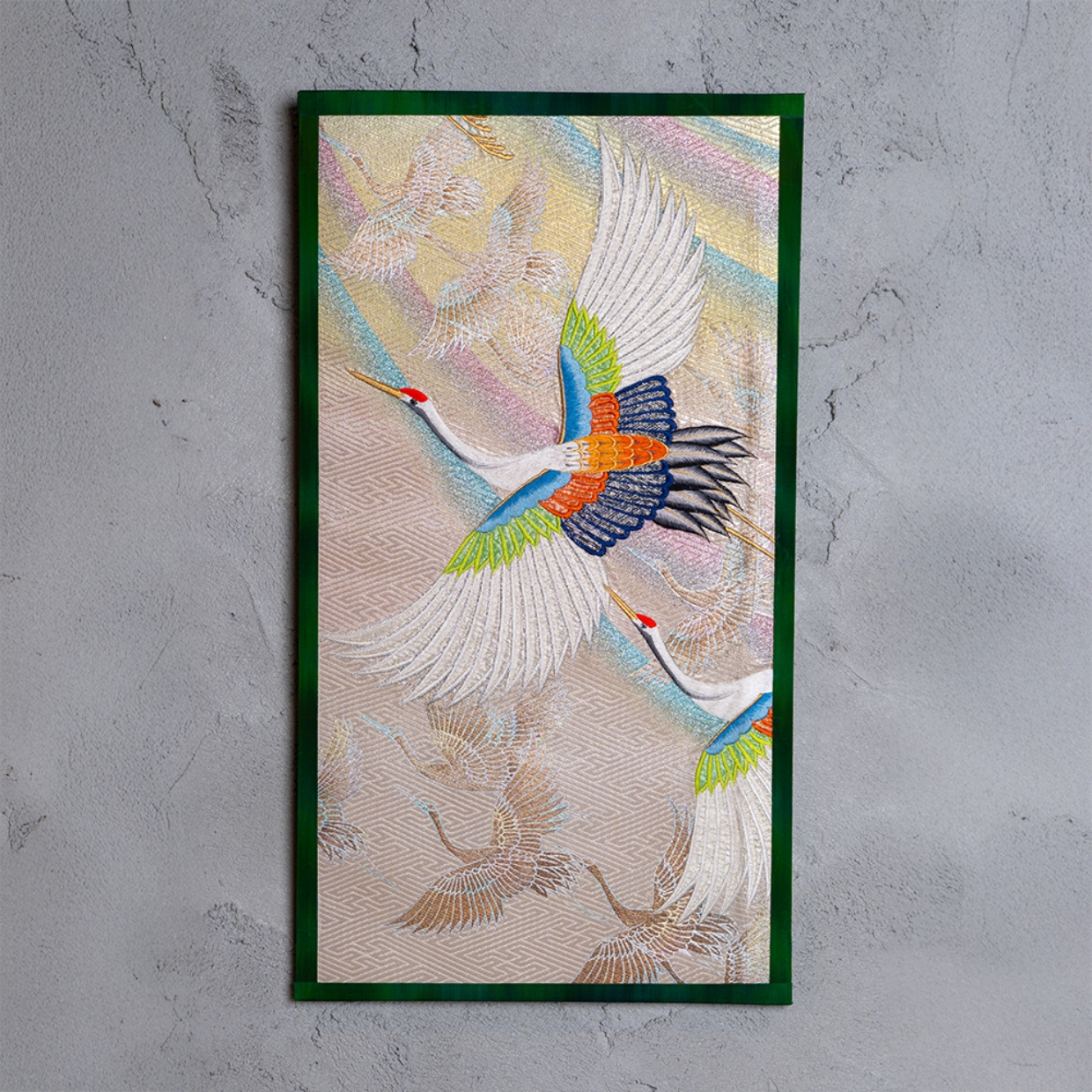
e. 24 Rainbow
(35cmW×65cmH)
80,000JPY
A flock of cranes soaring through the sky where a rainbow arches.
Cranes symbolize wishes for longevity, marital harmony, good relationships, and prosperity. -
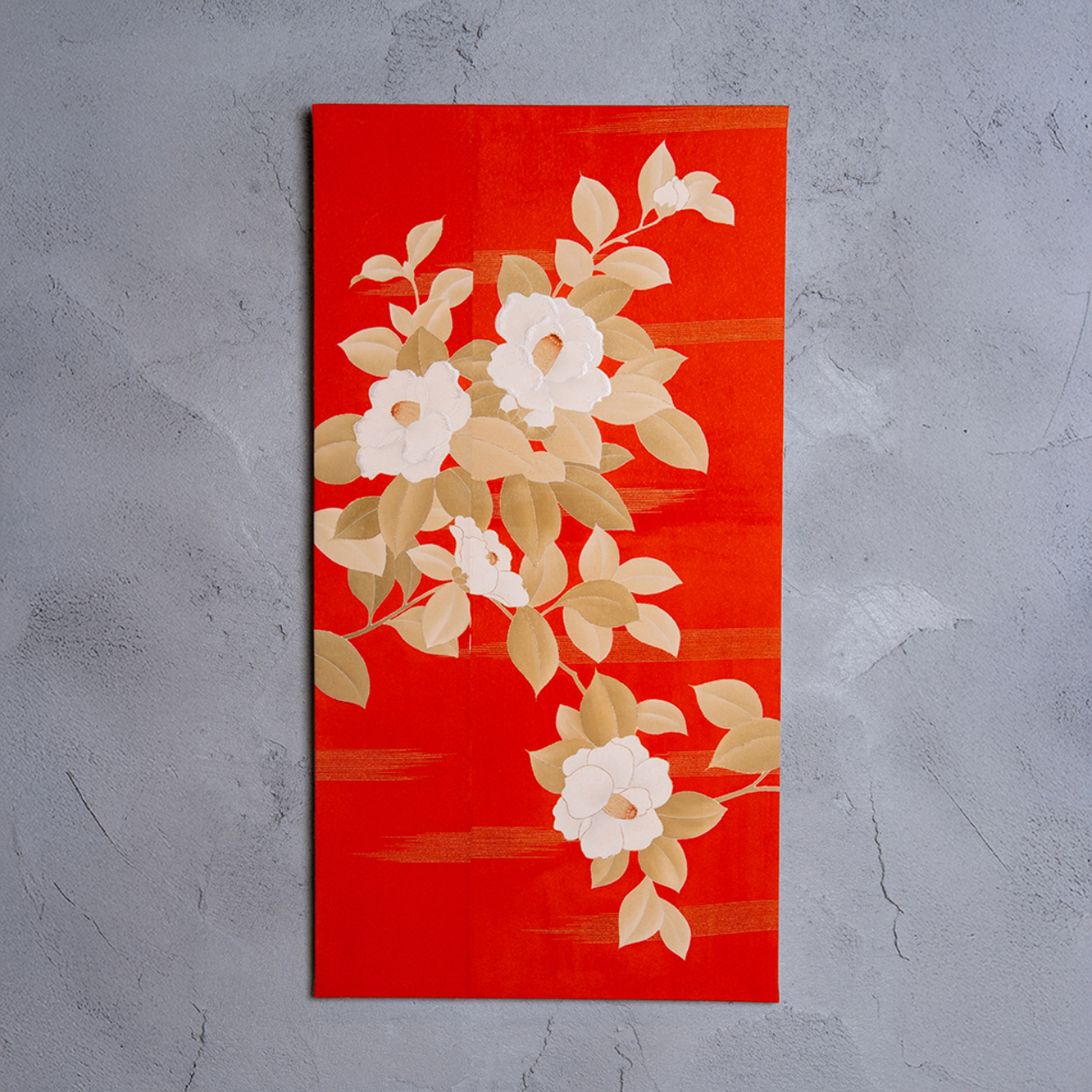
e. 23 Camellia
(44cmW×84cmH)
80,000JPY
The camellia pattern is considered a sacred motif that wards off evil spirits and brings good fortune, symbolizing vitality that persists even in winter without shedding its leaves.
-
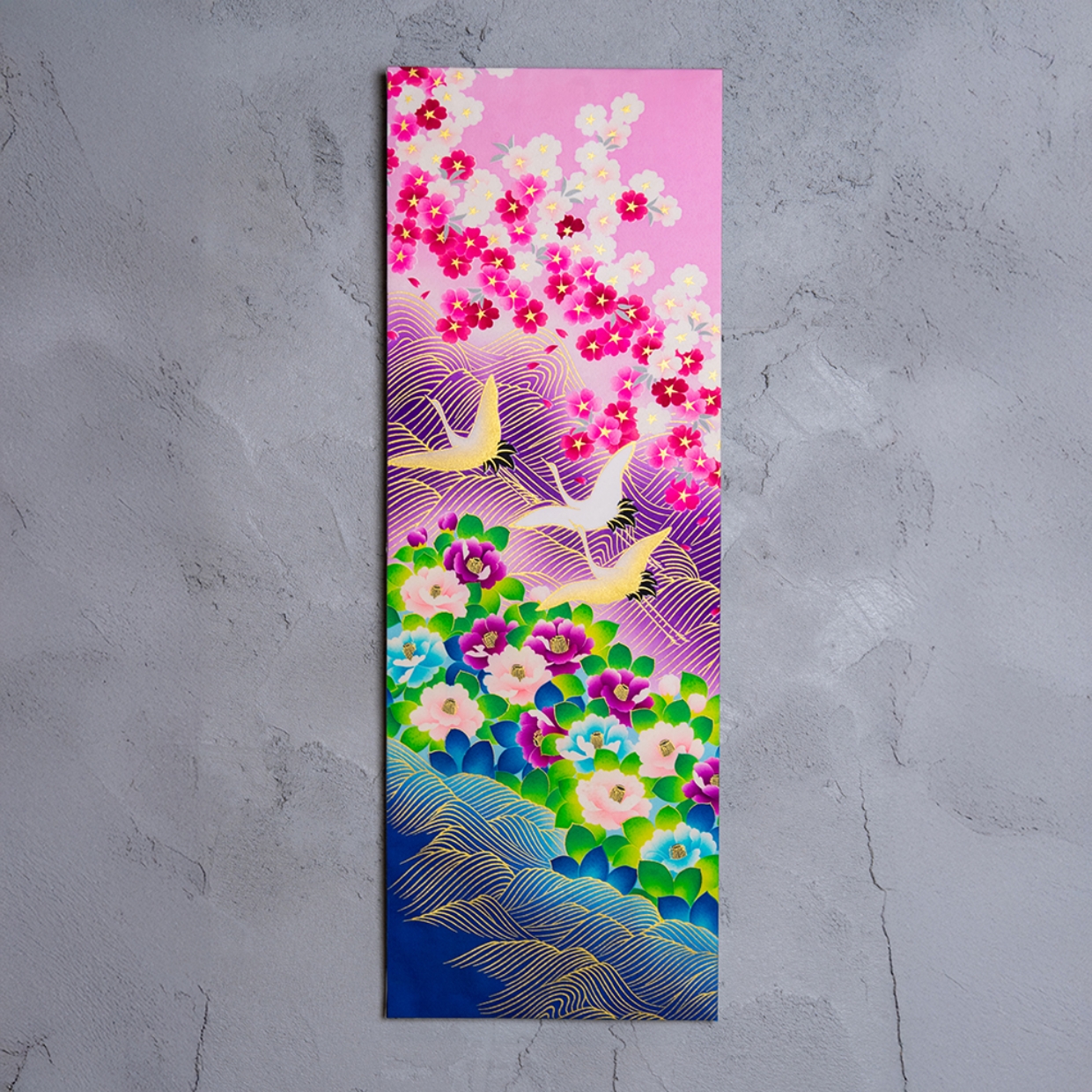
e. 22 Flowing Water, Flowering Crane
(32cmW×92cmH)
80,000JPY
The crane is said to symbolize longevity, marital harmony, and prosperity.
It depicts a flock of young cranes flying over the vast spring ocean. -
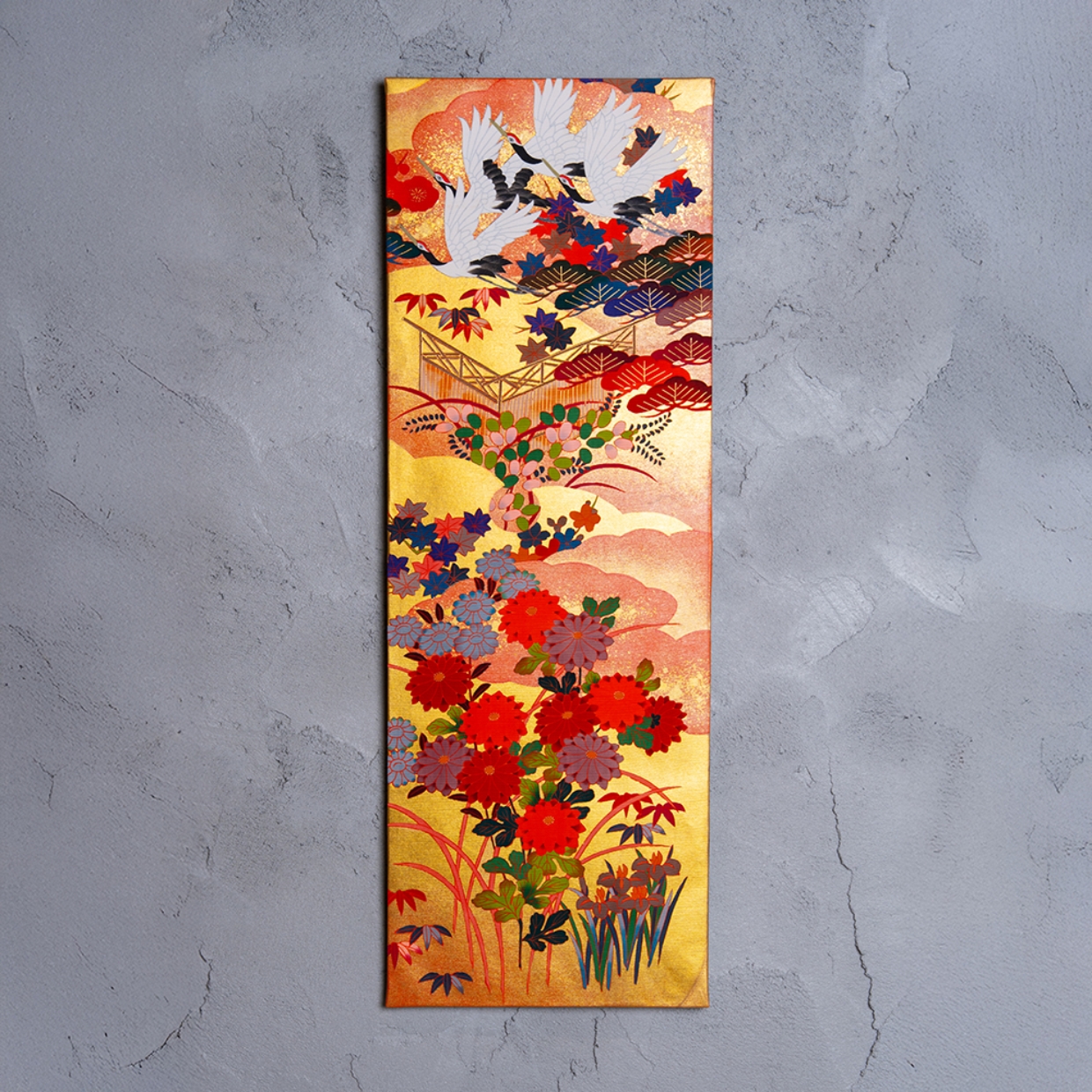
e. 21 Makamizu
(33cmW×95cmH)
130,000JPY
A hand-painted Yuzen wedding kimono depicting serene, lush satoyama landscapes with seasonal flowers and flocks of migratory birds.
This bridal attire is crafted with heartfelt prayers for the happiness of the newlyweds. -
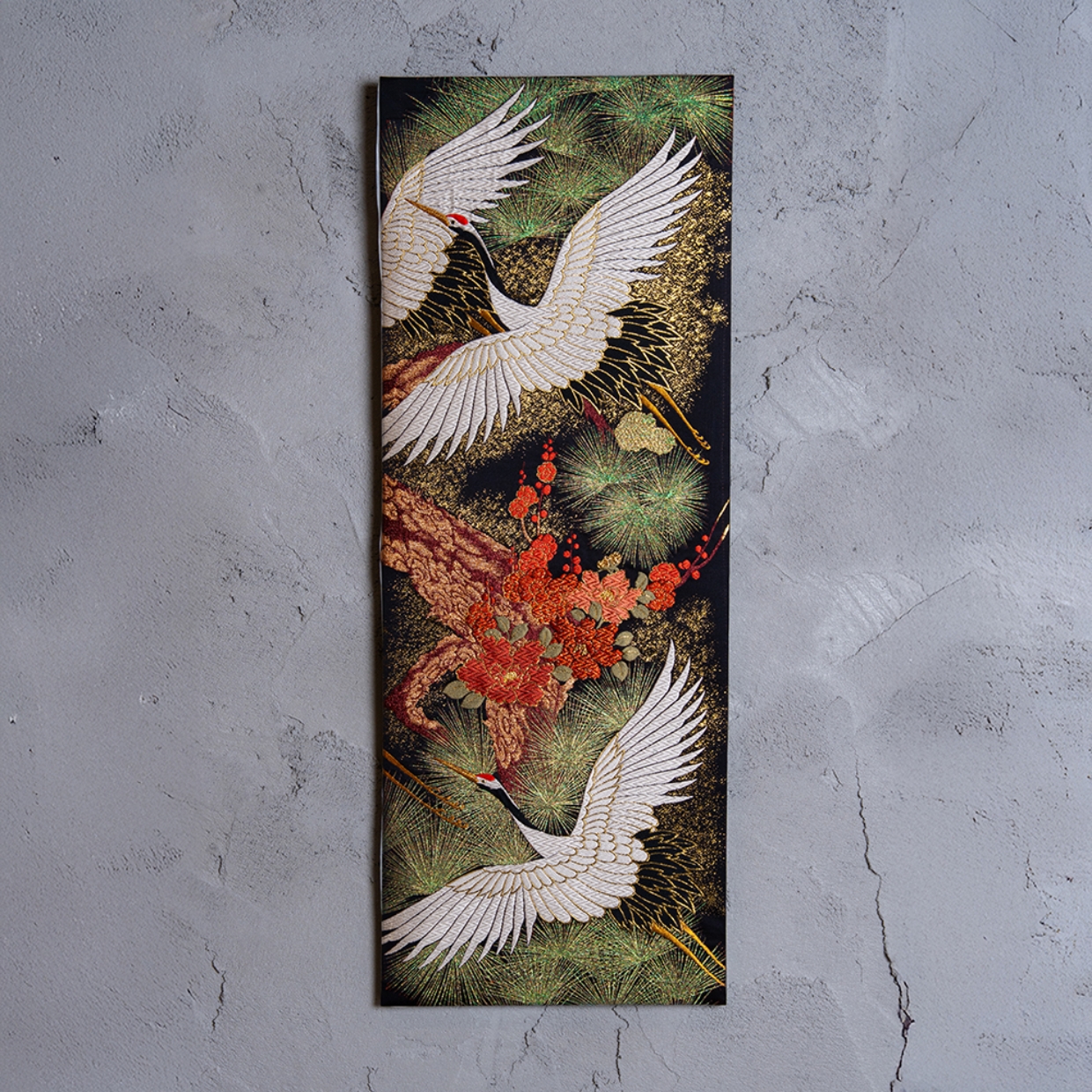
e. 20 Needle Pine Crane
(35cmW×93cmH)
80,000JPY
This bridal attire is crafted from Nishijin-ori, woven from warp and weft threads.
The pine and crane motif, considered a quintessential auspicious pattern, symbolizes longevity, marital harmony, and prosperity. -
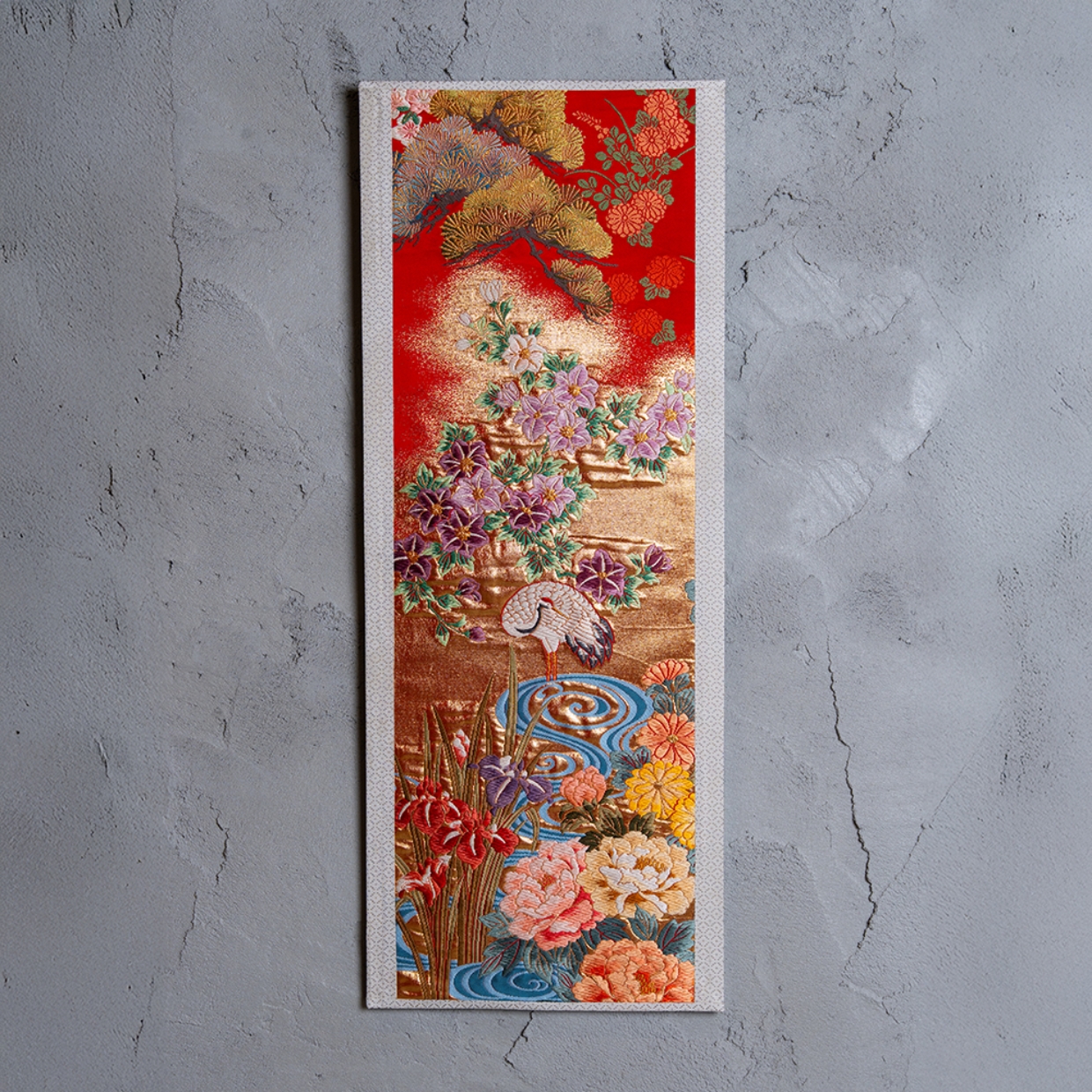
e. 19 Standing Crane
(38cmW×98cmH)
80,000JPY
This is a Nishijin-ori bridal kimono.
Patterns are created by weaving the weft threads through the warp threads.
The elegant, luxurious, and beautiful bride is uniquely Japanese. -
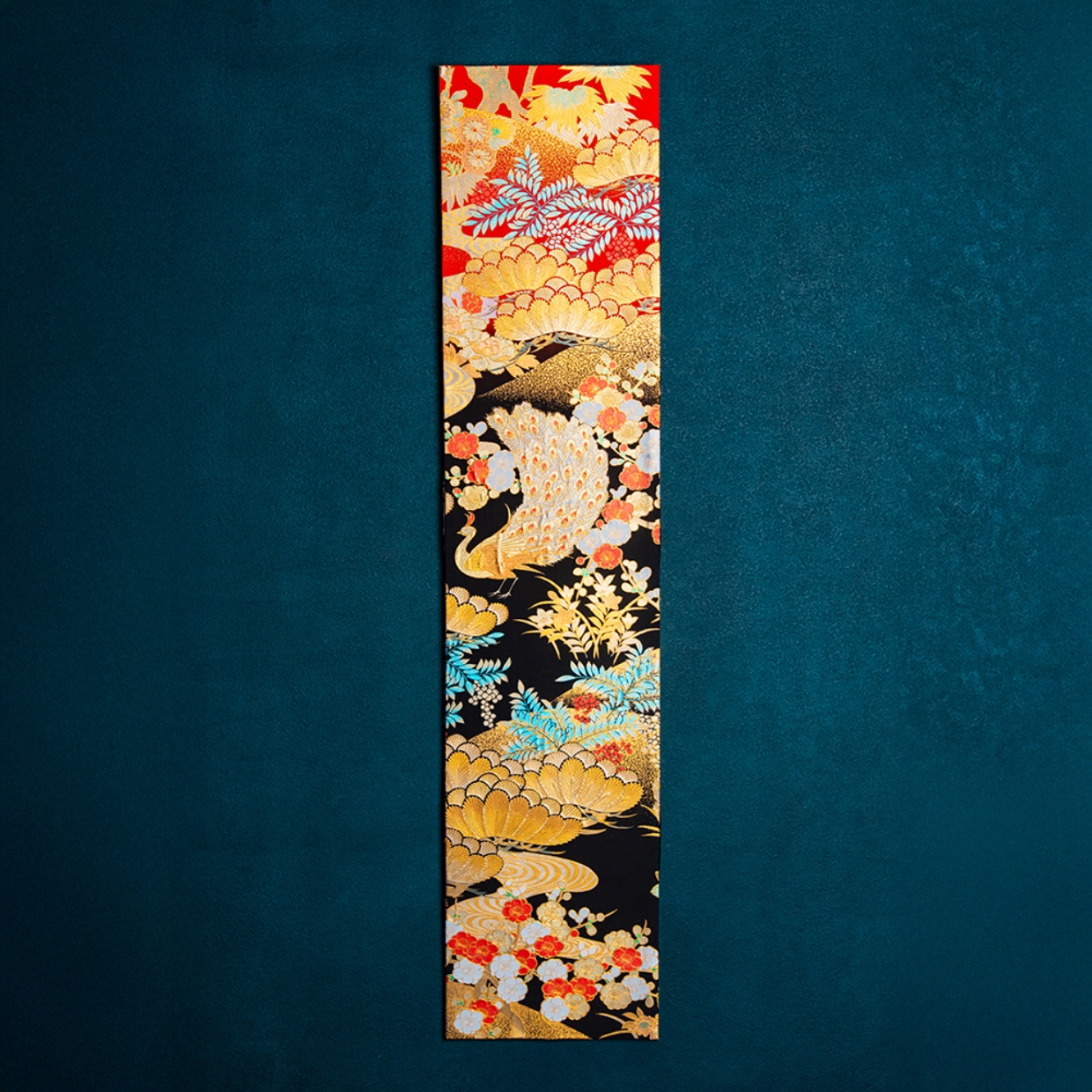
e. 18 Red-Black-Gold-Decorated Pine Peacock
(32cmW×143cmH)
150,000JPY
The luxurious gold-decorated kimono, dyed in alternating red and black, is the bride’s attire.
Japanese bridal attire is required to embody five elements: dignity, elegance, luxury, splendor, and purity.


